
How Live Nation Streamlined Their Artist Logistics
A case study on how one of the world's largest event companies transformed their travel coordination process.
Ethan Cross
Chief Technology Officer
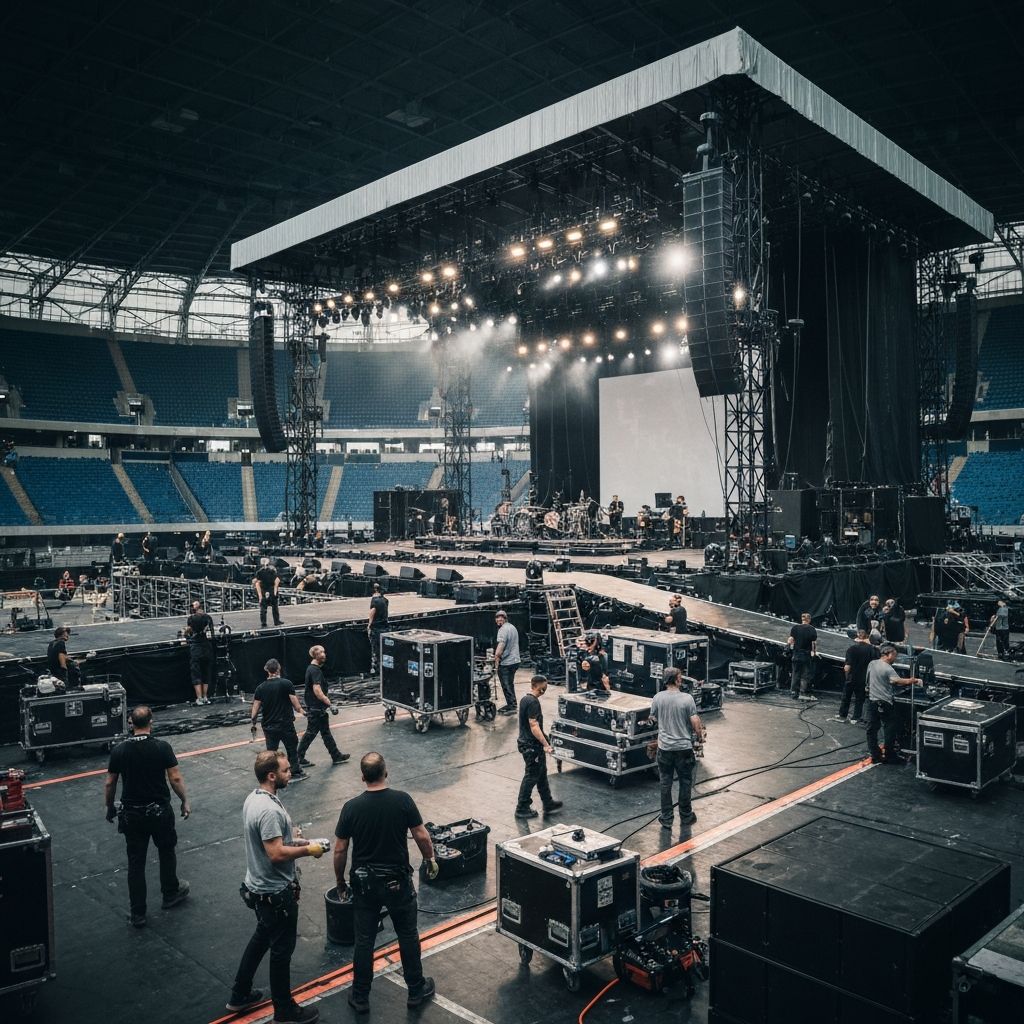
When you're responsible for over 40,000 events annually across 40+ countries, logistics isn't just a department—it's the backbone of your entire operation. This is the story of how a major entertainment company transformed their approach to artist travel coordination.
The Challenge
Managing travel for thousands of artists, crew members, and staff across a global operation presented enormous challenges:
- **Scale:** Coordinating travel for 100,000+ individuals annually
- **Complexity:** Each artist has unique requirements, preferences, and contractual obligations
- **Time Sensitivity:** Last-minute changes are the norm, not the exception
- **Cost Pressure:** Travel is a significant line item requiring constant optimization
- **Accountability:** Clear audit trails needed for every booking decision
The existing process relied heavily on email, phone calls, and disparate spreadsheets maintained by regional teams. Information silos led to duplicated efforts, missed opportunities for cost savings, and occasional serious errors.
The Transformation
The company embarked on a comprehensive digital transformation of their logistics operations:
Phase 1: Centralization (Months 1-3)
All travel data was migrated to a single platform, establishing one source of truth for every booking. Regional teams maintained operational autonomy but worked within a unified system.
Phase 2: Automation (Months 4-6)
Repetitive tasks were automated: - Itinerary generation and distribution - Calendar synchronization - Document collection and verification - Standard notification workflows
Phase 3: Intelligence (Months 7-12)
Advanced analytics and AI capabilities were layered in: - Predictive disruption alerts - Cost optimization recommendations - Pattern recognition for preference learning - Automated compliance checking
The Results
After 18 months of operation on the new platform:
Efficiency Gains - **62% reduction** in time spent on routine booking tasks - **45% faster** response to travel disruptions - **80% decrease** in email volume related to travel coordination
Cost Savings - **$4.2 million** annual savings through optimized booking timing - **23% reduction** in last-minute premium bookings - **15% improvement** in preferred vendor utilization
Quality Improvements - **94% satisfaction rate** among traveling personnel (up from 71%) - **Zero** missed performances due to travel errors (previously 3-5 annually) - **99.7% accuracy** in travel documentation
Key Success Factors
Several factors contributed to the successful transformation:
Executive Sponsorship: Leadership treated this as a strategic initiative, not just an IT project. Resources were allocated accordingly.
Change Management: Extensive training and support helped teams adapt to new workflows. Early adopters became internal champions.
Iterative Approach: Rather than a "big bang" launch, capabilities were rolled out progressively, allowing for learning and adjustment.
User-Centric Design: The platform was designed around the actual workflows of coordinators, not theoretical ideals. Extensive user research informed every decision.
Lessons for Other Organizations
While this transformation occurred at massive scale, the principles apply to organizations of any size:
1. **Start with data centralization** before adding automation 2. **Measure baseline metrics** so you can quantify improvements 3. **Involve end users** in system design and testing 4. **Plan for change management** as carefully as technical implementation 5. **Think platform, not point solution** to enable future capabilities
The future of event logistics is intelligent, automated, and unified. Organizations that embrace this transformation will gain significant competitive advantages in efficiency, cost management, and talent satisfaction.